
Three Places Bariatric Patients Disengage Before and After Surgery

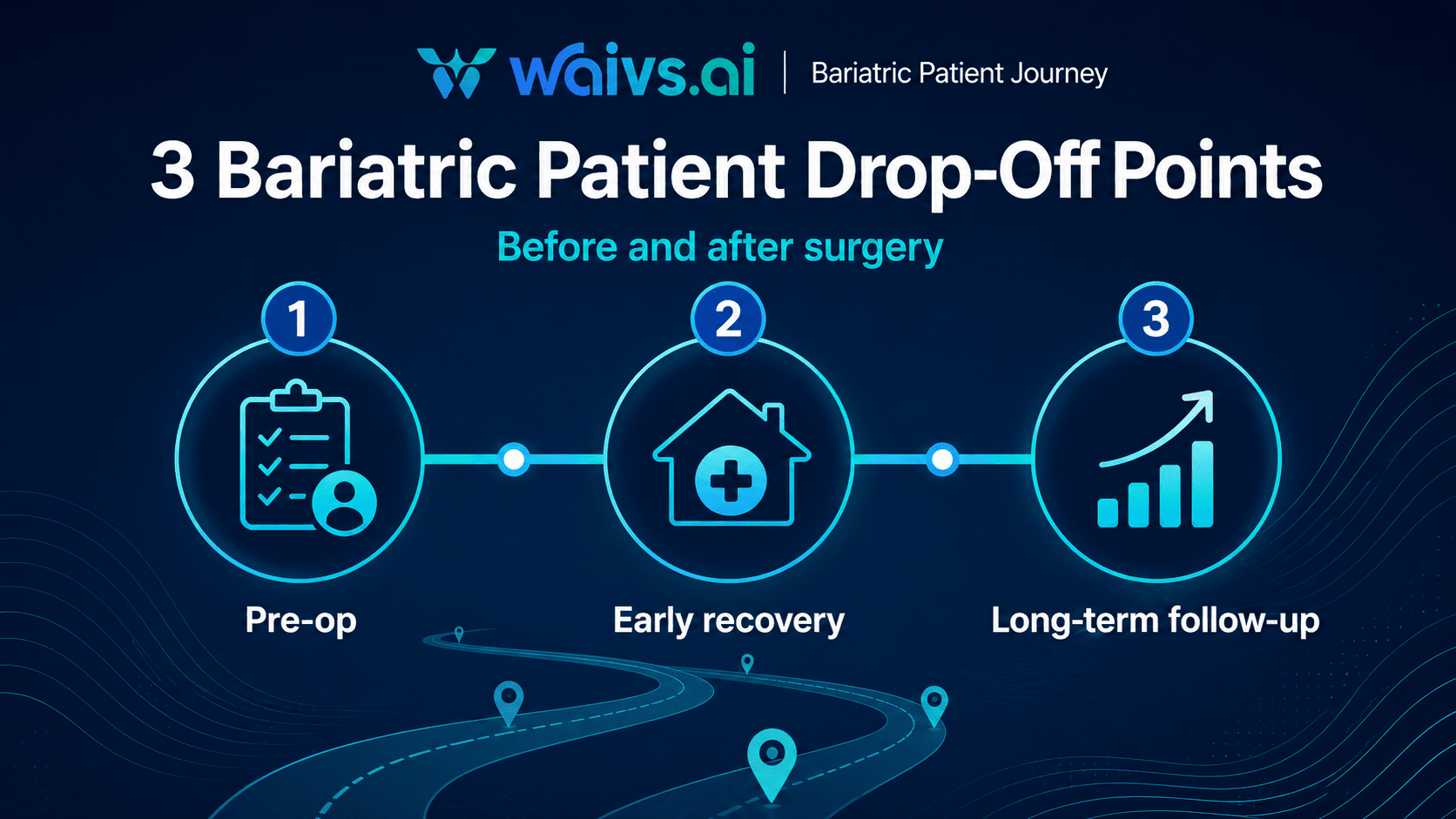
Patient disengagement is common across surgical practices. It usually develops through small missed steps, unanswered questions and fading contact across a long bariatric care journey that can feel overwhelming to patients.
Patient leakage is usually a pathway problem, not a single missed call
Bariatric programs often use the term patient leakage to describe patients who stop progressing, disengage from follow-up or leave the care pathway. The term can sound financial, but the underlying problem is operational and human: patients encounter delays, uncertainty, competing priorities, complex requirements and major behaviour changes over an extended period.
A 2026 narrative review found wide variation in bariatric surgery completion rates across programs and countries. The review identified waiting times, insurance barriers, psychosocial readiness, motivation and program design among the factors associated with preoperative attrition. That variability matters because it shows there is no single reason patients disappear from a pathway and no single reminder that will solve every case. [2]
The more useful question is: where and why do patients lose the confidence to continue on the outlined path? Three points deserve particular attention.
1. During preoperative clearance and preparation
The preoperative period can involve medical clearance, nutritional education, psychological assessment, testing, insurance requirements and behaviour-change expectations. These are a lot of clinically important steps that can leave a patient feeling physically stalled.When the next step is unclear to them, the pathway can become a series of disconnected tasks rather than one coordinated journey.
Signals of pre-op patient drop-off can include an overdue clearance, missed education, repeated rescheduling, an unanswered message or a long period without a meaningful touchpoint. These signals do not prove that the patient intends to leave. They indicate that the program may need a clearer, more consistent method of checking progress and explaining the next step.
A strong workflow assigns a purpose to every touchpoint. Instead of sending a generic reminder, the program can reinforce the specific requirement, explain why it matters, identify what is still outstanding and make the route back into the process obvious.
2. During the transition from discharge to early recovery
The early postoperative period brings a different form of drop-off. Patients are no longer preparing for an event; they are beginning the process of recovery which has no set end-date and is frankly scary. Questions about hydration, diet progression, medications, wound care, nausea, activity and expected symptoms can arrive at any hour and persist constantly in the patients mind.
Education is frequently delivered before surgery through classes, printed materials and portals. In a 2025 national survey of bariatric nurses and integrated health professionals, printed materials were used by 95.2% of respondents, while only 62.1% reported evaluating the effectiveness of the knowledge patients acquired. The gap is important: a program can document that education was delivered without knowing whether it stuck with a patient enough for them to apply during recovery. [3]
Structured postoperative check-ins create a repeatable opportunity to reinforce approved instructions, collect patient-reported information and identify responses matching predefined escalation criteria. 24/7 availability helps give patients comfort during their most vulnerable periods when a care team may not be available (the middle of the night). The goal is not to replace the care team. It is to make sure routine follow-up happens consistently and that the team can focus attention where review is needed.
3. During long-term follow-up
Long-term follow-up competes with daily life. The urgency of surgery fades, while ongoing responsibilities such as nutrition, vitamins, laboratory monitoring, appointments, physical activity and chronic-disease management remain.
Programs often concentrate their communication resources around preparation and the first weeks after surgery. Long-term touchpoints may become less frequent, less structured and more dependent on the patient initiating contact. That creates a visibility gap: the program may not know whether the patient is doing well, has moved to another provider, is confused about follow-up or has simply stopped responding.
Long-term engagement works best when it is planned as part of the pathway rather than added after the fact. Programs can define milestone-based education, periodic check-ins and clear routes back to the team without turning every interaction into a manual coordinator task.
Build one connected pathway across all three points
The three disengagement points are connected. A patient who experiences confusion during preoperative clearance may enter surgery with unresolved knowledge gaps. A patient who struggles during early recovery may become less likely to remain engaged over the long term. A fragmented communication model makes those transitions harder to see.
A useful starting exercise is to map the bariatric journey from referral through long-term follow-up and identify four things at each milestone: what the patient needs to know, what the patient needs to do, what information the program needs back and what conditions require staff review.
An AI Surgical Care Companion can support that model by using the customer’s own bariatric protocols, care guides and internal templates. It can deliver approved routine guidance, collect structured responses and identify messages that match predefined escalation criteria. Procedure type, pre-op or post-op stage, days since surgery and previous responses can help provide context. Clinical decisions remain with the bariatric team.
A practical first step
Choose one transition where the program currently loses visibility—such as an incomplete clearance, a Day 10 postoperative check-in or a missed long-term appointment. Document the current workflow, the approved patient instructions and the conditions that should prompt human review. That single workflow can become the starting point for a more connected patient journey.
Sources and further reading
- Caydı S, Anafarta Şendağ M. Barriers to bariatric surgery completion: A narrative review of preoperative attrition and its determinants. Turkish Journal of Surgery. 2026;42(1):26-34. https://pmc.ncbi.nlm.nih.gov/articles/PMC12964095/
- Groller KD, Curley B, Gourash W. The practice of preoperative patient education in metabolic bariatric surgery: results of a national survey. Surgery for Obesity and Related Diseases. 2025;21(8):971-981. https://www.sciencedirect.com/science/article/pii/S1550728925006847
Related Articles
 Bariatric Surgery
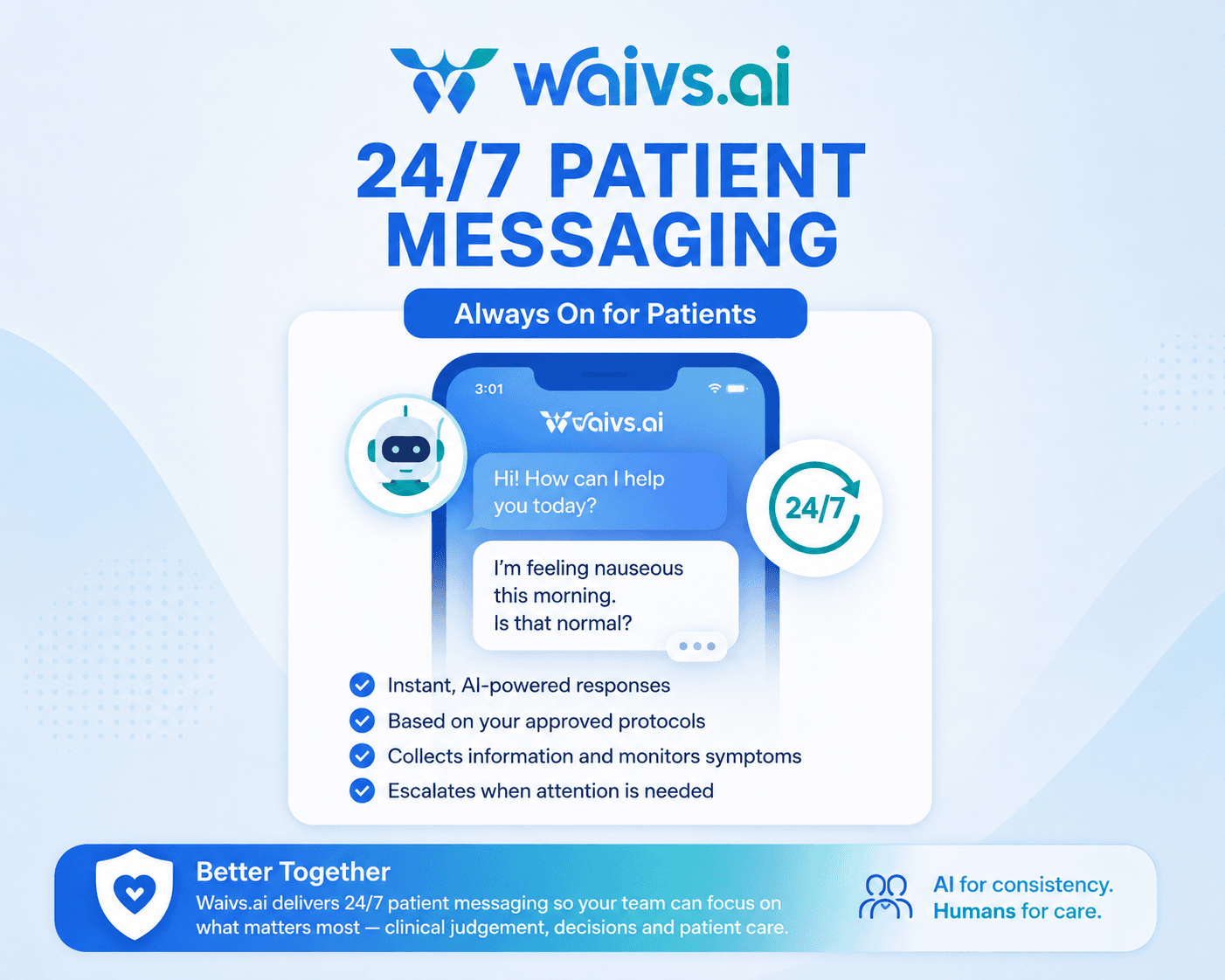
24/7 Patient Messaging Is Not the Same as 24/7 Clinical Coverage
Patients can need guidance outside office hours. Giving them a channel that is always available is valuable, but what does availability mean in the context of AI? Patient Messaging Availability vs. Clinical Coverage 24/7 patient messaging means a patient can send a message or respond to an automated check-in at any time. The system can receive the interaction, provide […]
 Bariatric Surgery
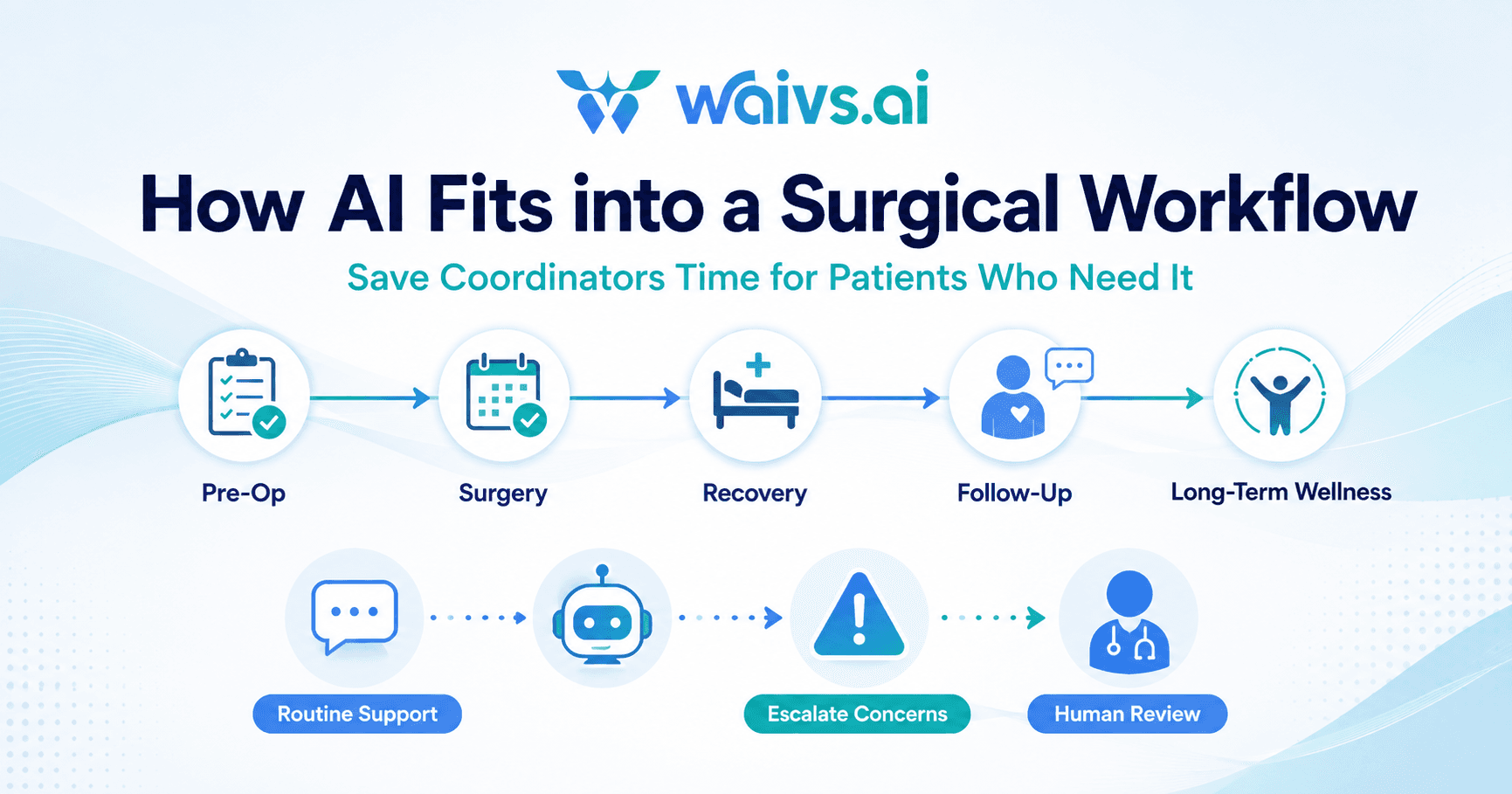
How AI Fits into a Surgical Workflow – Save Coordinators Time for Patients Who Need It
The value of AI in a surgical workflow is not that it replaces judgment. It is that it separates repeatable communication from work that requires a clinician or coordinator. Patient Competition for Attention in your Inbox – High and Low Priority A patient asking which diet stage comes next and a patient describing a possible warning sign may reach […]
 Bariatric Surgery
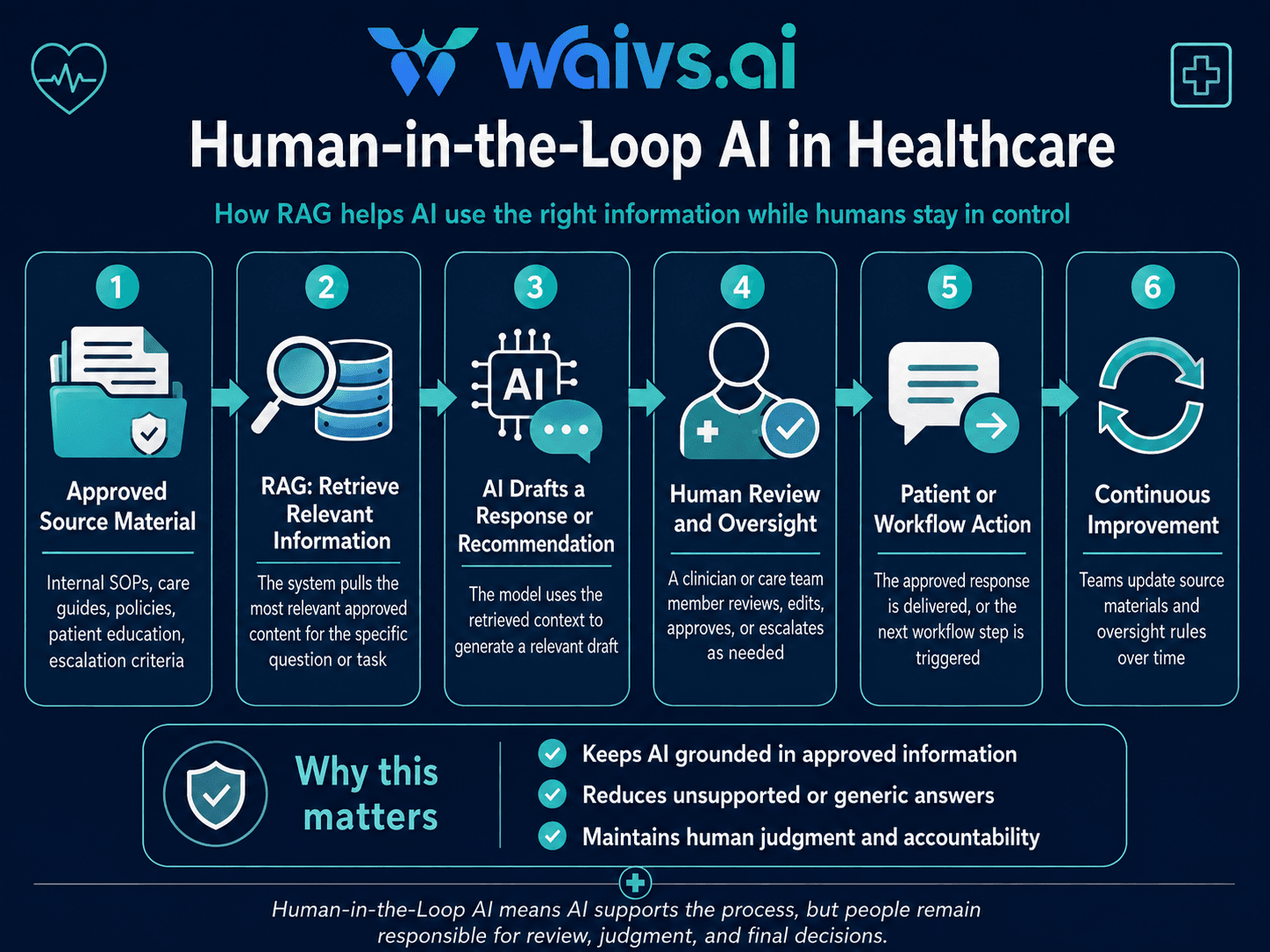
How Does Human-in-the-Loop AI Work in Surgical Patient Care?
Human-in-the-loop is not a single approval button. It is an operating model that defines what the AI may do, what it must not do and where people remain accountable. Human oversight begins before the first patient message A responsible AI workflow is designed by people before it is used by patients. The surgical program decides which use cases are appropriate, […]