
How AI Fits into a Surgical Workflow – Save Coordinators Time for Patients Who Need It

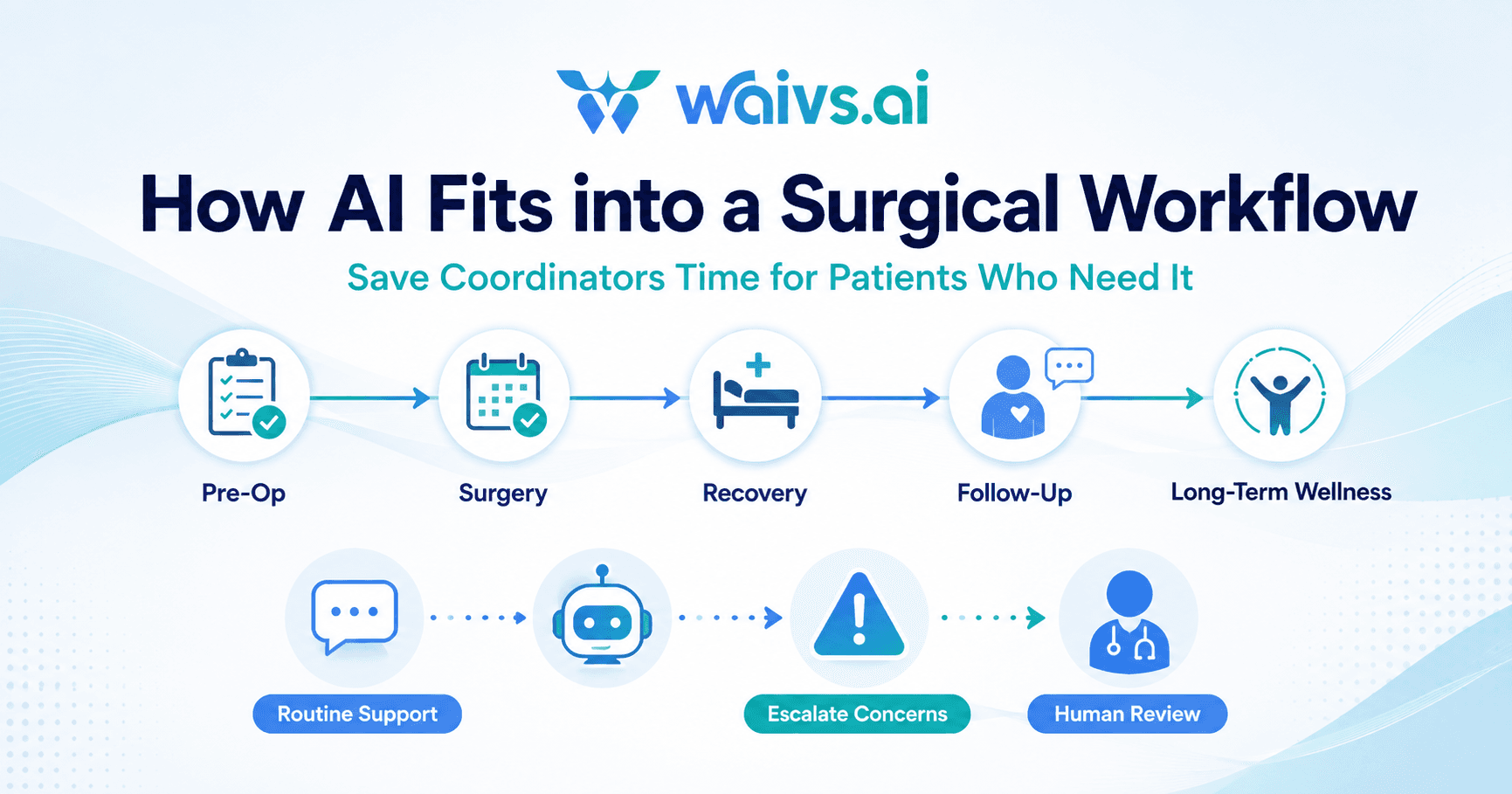
The value of AI in a surgical workflow is not that it replaces judgment. It is that it separates repeatable communication from work that requires a clinician or coordinator.
Patient Competition for Attention in your Inbox – High and Low Priority
A patient asking which diet stage comes next and a patient describing a possible warning sign may reach the clinic through the same phone line or message queue. One request may be answered using standard program guidance. The other may require rapid review, context and clinical judgment. Until someone reads both, they compete for the same attention.
This is where an AI Surgical Care Companion can fit into the workflow. Its role is not to make independent clinical decisions. Its role is to support routine communication, collect structured patient information and identify responses that match the program’s predefined escalation criteria.
CPSO guidance on AI in clinical practice emphasizes that AI should complement care rather than replace medical expertise. It also highlights accuracy, accountability, privacy, bias, transparency and clinician review as important considerations. [4]
What the AI can support
A surgical program can use the companion for repeatable tasks such as preoperative reminders, readiness questions, education reinforcement, postoperative check-ins, appointment prompts and common questions that are answered by approved program content.
The customer uploads its own protocols, care guide and internal templates. Those materials define the boundaries of the patient experience. The system should not invent a new clinical pathway or substitute generic internet content for the program’s instructions.
The program can configure different workflows by procedure type and stage of care. Context can include whether the patient is pre-op or post-op, the number of days since surgery and previous responses. These factors can determine which approved questions are asked and which escalation criteria apply.
What does the AI not do
The companion should not diagnose a complication, select a treatment, override a clinician or provide an unapproved answer simply because the patient asked a question. When an interaction falls outside approved content or the system is uncertain, the safer workflow is to stop, document the interaction and route it for human review.
It is also important to distinguish a predefined escalation match from a clinical judgment. The system can identify that a response meets a condition configured by the program. A qualified member of the care team decides what the response means and what action is appropriate.
Clear language protects both patients and staff: Waivs organizes and surfaces information; clinicians interpret and act on it.
A simple message-handling workflow
A practical workflow has five stages. First, the patient sends a message or responds to a check-in. Second, the system uses the relevant procedure, stage, timing and previous responses to select the appropriate approved workflow. Third, routine questions are answered using customer-provided content. Fourth, responses matching predefined escalation criteria are surfaced to the appropriate role. Fifth, the clinician, nurse, coordinator or other authorized team member reviews the information and decides the next step.
Administrator-controlled permissions determine who can view transcripts, patient responses, escalation details and other administrative information. Surgeons, nurses, coordinators and dietitians may need different access based on their responsibilities.
This model keeps human accountability visible. The AI supports the flow of information without becoming the final decision-maker.
Where to begin
Start with one workflow that is routine, frequent and already guided by a stable protocol. A postoperative check-in, preoperative checklist reminder or common education question is usually easier to govern than a broad, open-ended clinical interaction.
Document the approved source material, the information the system may collect, the escalation conditions, the responsible reviewer and the expected response window. Test routine, ambiguous and concerning scenarios before using the workflow with patients.
The best first use case is not necessarily the one with the biggest theoretical return. It is the one the program can define, supervise and measure clearly.
AI should create a clearer queue—not a hidden one
A useful implementation makes it easier to see what was answered, what was escalated, why it was escalated and who is responsible for review. If the workflow is not understandable to the people operating it, automation has only moved the complexity somewhere else.
Sources and further reading
- College of Physicians and Surgeons of Ontario. Using Artificial Intelligence in Clinical Practice. Updated August 2025. https://www.cpso.on.ca/Physicians/Policies-Guidance/Advice-to-the-Profession/Using-Artificial-Intelligence-in-Clinical-Practice
- National Institute of Standards and Technology. Artificial Intelligence Risk Management Framework (AI RMF 1.0). NIST AI 100-1. 2023. https://www.nist.gov/publications/artificial-intelligence-risk-management-framework-ai-rmf-10
Related Articles
 Bariatric Surgery
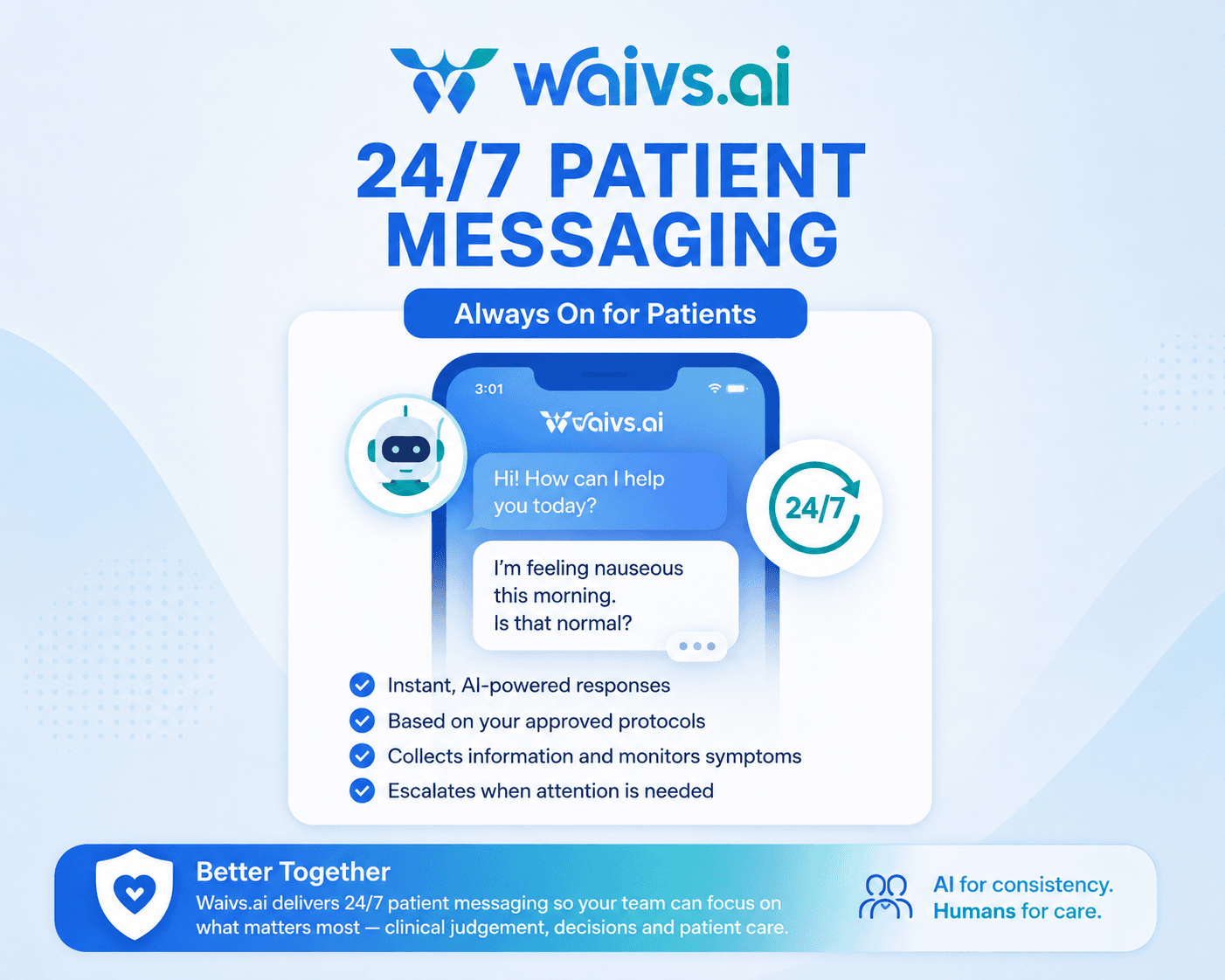
24/7 Patient Messaging Is Not the Same as 24/7 Clinical Coverage
Patients can need guidance outside office hours. Giving them a channel that is always available is valuable, but what does availability mean in the context of AI? Patient Messaging Availability vs. Clinical Coverage 24/7 patient messaging means a patient can send a message or respond to an automated check-in at any time. The system can receive the interaction, provide […]
 Bariatric Surgery
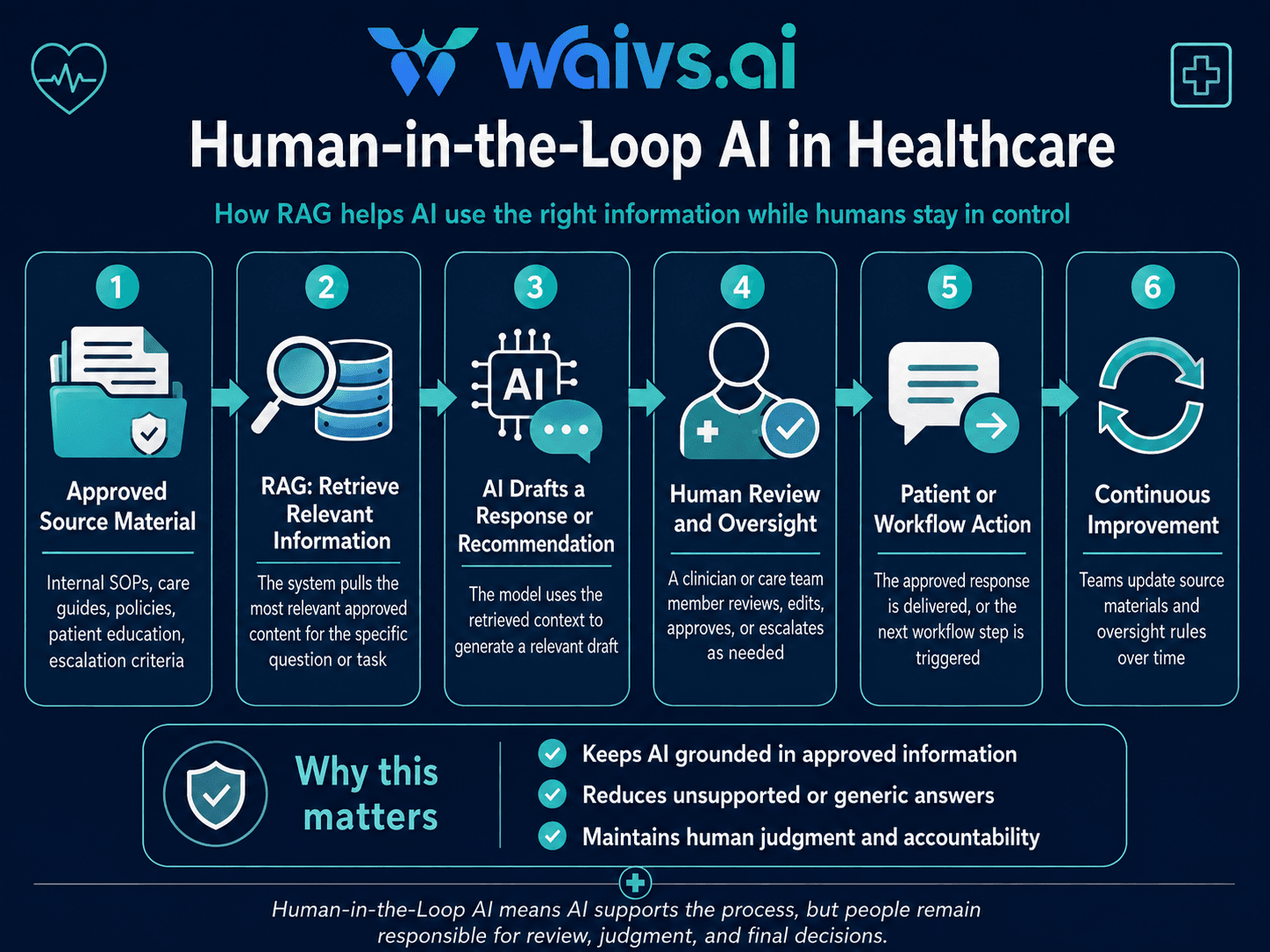
How Does Human-in-the-Loop AI Work in Surgical Patient Care?
Human-in-the-loop is not a single approval button. It is an operating model that defines what the AI may do, what it must not do and where people remain accountable. Human oversight begins before the first patient message A responsible AI workflow is designed by people before it is used by patients. The surgical program decides which use cases are appropriate, […]
 Bariatric Surgery
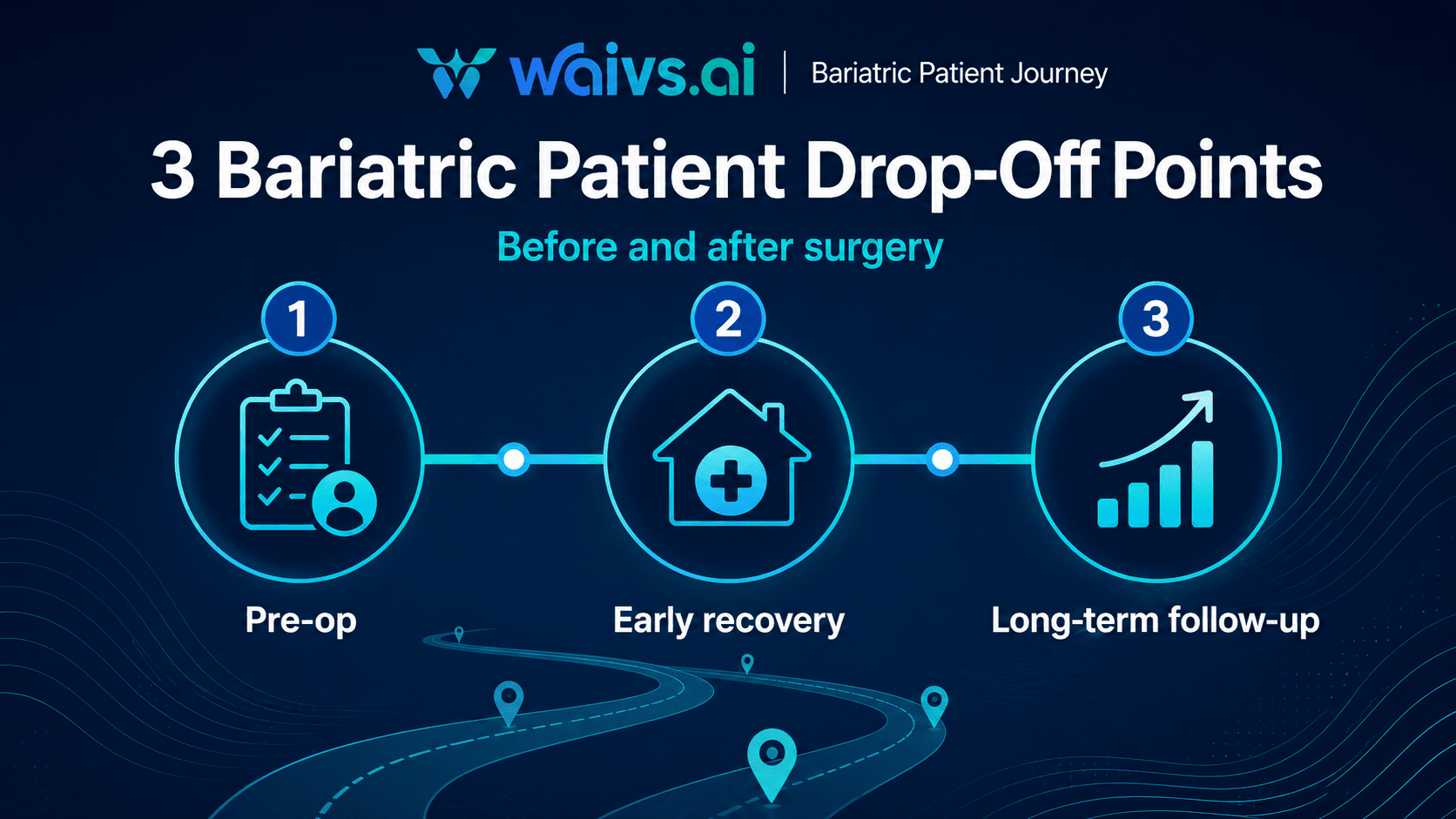
Three Places Bariatric Patients Disengage Before and After Surgery
Patient disengagement is common across surgical practices. It usually develops through small missed steps, unanswered questions and fading contact across a long bariatric care journey that can feel overwhelming to patients. Patient leakage is usually a pathway problem, not a single missed call Bariatric programs often use the term patient leakage to describe patients who stop progressing, disengage from follow-up or leave the care […]