
24/7 Patient Messaging Is Not the Same as 24/7 Clinical Coverage

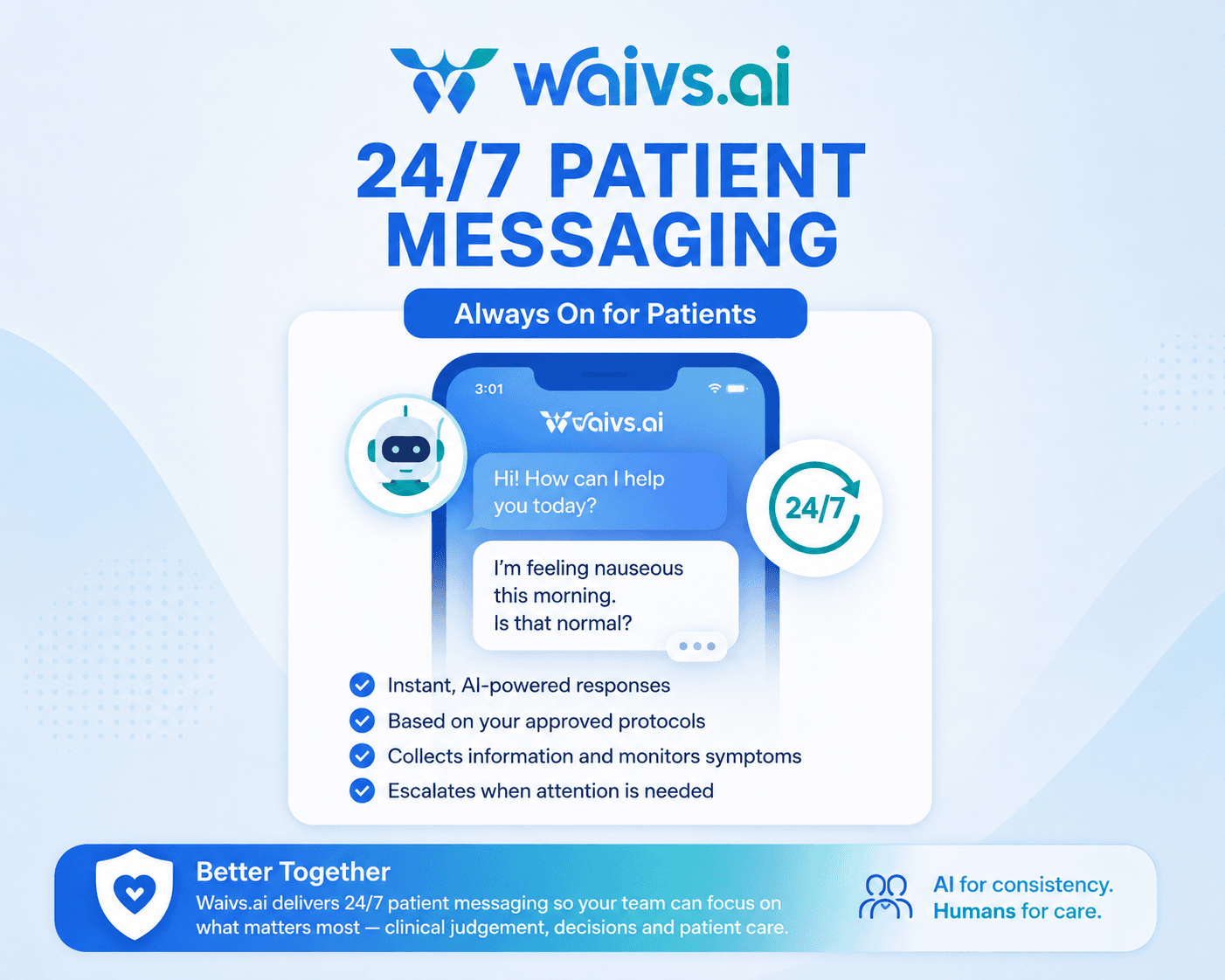
Patients can need guidance outside office hours. Giving them a channel that is always available is valuable, but what does availability mean in the context of AI?
Patient Messaging Availability vs. Clinical Coverage
24/7 patient messaging means a patient can send a message or respond to an automated check-in at any time. The system can receive the interaction, provide approved routine information within its configured boundaries and collect patient-reported details for the program.
24/7 clinical coverage means a qualified clinical professional is continuously available to assess the information and respond. These are different operating models. A website or patient communication should not imply the second simply because the technology supports the first.
The distinction is especially important after surgery, when a patient may interpret phrases such as “always available” or “real-time support” as a promise that a clinician is watching every interaction immediately.
What 24/7 Patient Messaging Availability Can Accomplish
An AI Surgical Care Companion can support routine, program-approved interactions outside office hours. A patient may ask about an education topic, complete a scheduled check-in or report information that the program wants to collect consistently.
The system can document the interaction and identify responses matching predefined escalation criteria. That creates a structured record for the team and can support earlier visibility than waiting for the patient to call during business hours.
The technology can also explain that it does not provide emergency care and that clinical review follows the program’s defined workflow. The specific emergency and after-hours instructions provided to patients should be approved by the program and should not promise capabilities that are not operationally available.
What Is a Surgical Programs Role in Curating a Patient Engagement Program
Technology does not decide the staffing model. Before launching 24/7 messaging, the program should define who reviews escalated interactions, when queues are monitored, which notifications are sent, what response windows apply and how responsibility changes outside normal hours.
The program should also decide which questions may receive an automated response and which should always go to human review. A patient’s procedure type, stage of care, days since surgery and previous responses may affect the applicable workflow, but those variables do not replace clinical interpretation.
Finally, the patient-facing language should be tested. Patients need to understand what the system can answer, when a person will review a message and what the system is not designed to do.
Recommended Wording When Explaining the Availability Accessible to Them
Stronger wording is specific: “Patients can send messages to the Waivs Surgical Care Companion 24 hours a day. Waivs can provide approved routine guidance and collect information at any time. Clinical review and response timing follow your program’s staffing and escalation procedures.”
Avoid language such as “a clinician is always available,” “immediate clinical response” or “24/7 medical monitoring” unless those statements are operationally true, contractually supported and consistently delivered.
Accuracy in this language is not a limitation. It is part of responsible patient communication and establishes clearer expectations for both the patient and the care team.
A Sample of an After-hours Interaction
A patient sends a message in the evening. The companion determines the relevant approved workflow using the patient’s procedure, stage, and timing. If the question is covered by approved program content, it provides that information and records the interaction. If the response matches a predefined escalation criterion or is outside the approved content, it is surfaced for human review according to the program’s configured process.
The patient does not need to wait until the office opens to submit the information. At the same time, the system does not imply that a clinician has already evaluated it. That is the practical value of 24/7 messaging when expectations are designed responsibly.
Availability should be designed as a service model
The question is not only whether patients can message at any time. It is whether the program has defined what happens next. Map patient expectations, automated boundaries, escalation ownership and response timing together before describing the service as 24/7.
Sources and further reading
- College of Physicians and Surgeons of Ontario. Using Artificial Intelligence in Clinical Practice. Updated August 2025. https://www.cpso.on.ca/Physicians/Policies-Guidance/Advice-to-the-Profession/Using-Artificial-Intelligence-in-Clinical-Practice
- National Institute of Standards and Technology. Artificial Intelligence Risk Management Framework (AI RMF 1.0). NIST AI 100-1. 2023. https://www.nist.gov/publications/artificial-intelligence-risk-management-framework-ai-rmf-10
Related Articles
 Bariatric Surgery
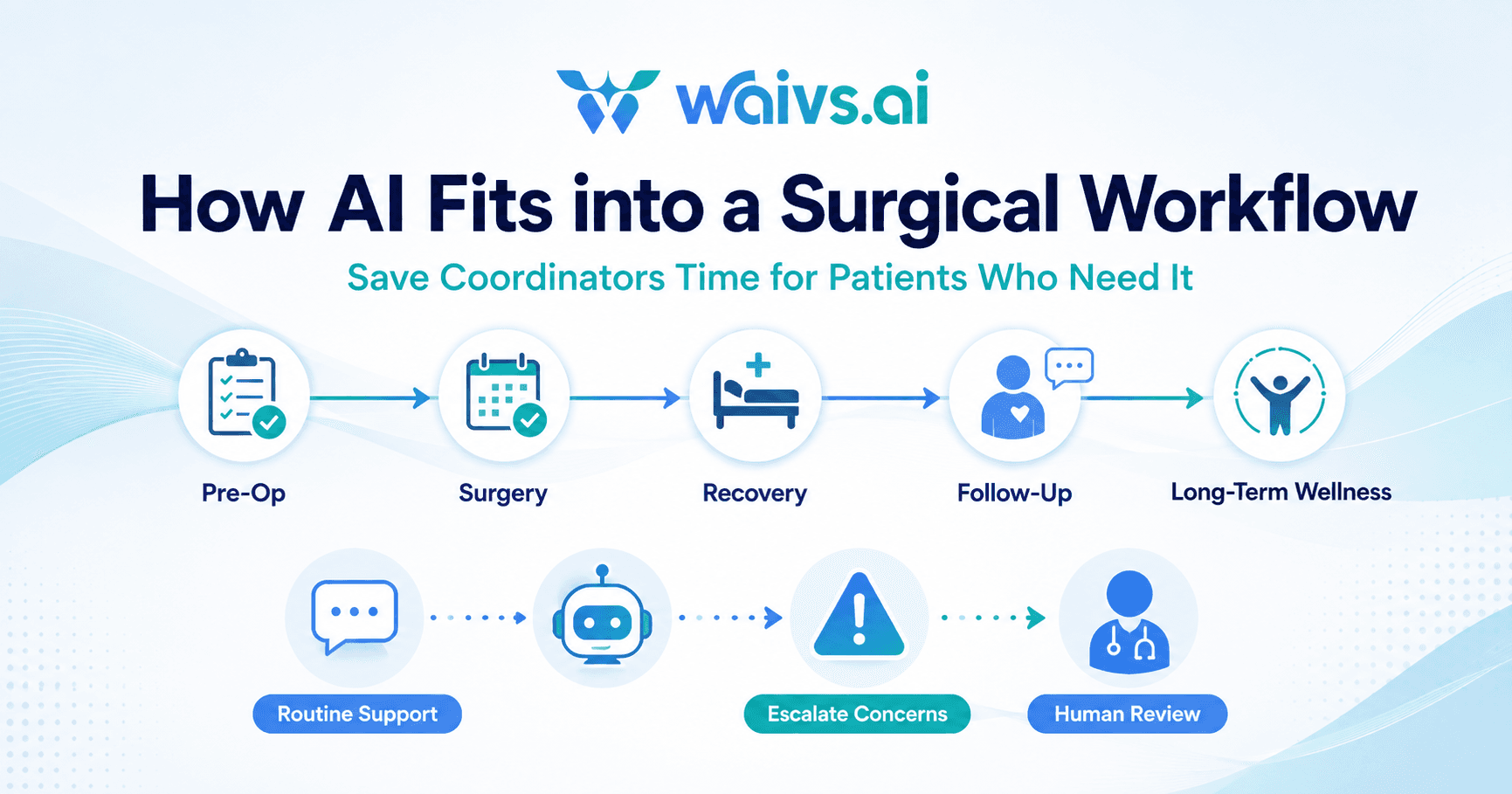
How AI Fits into a Surgical Workflow – Save Coordinators Time for Patients Who Need It
The value of AI in a surgical workflow is not that it replaces judgment. It is that it separates repeatable communication from work that requires a clinician or coordinator. Patient Competition for Attention in your Inbox – High and Low Priority A patient asking which diet stage comes next and a patient describing a possible warning sign may reach […]
 Bariatric Surgery
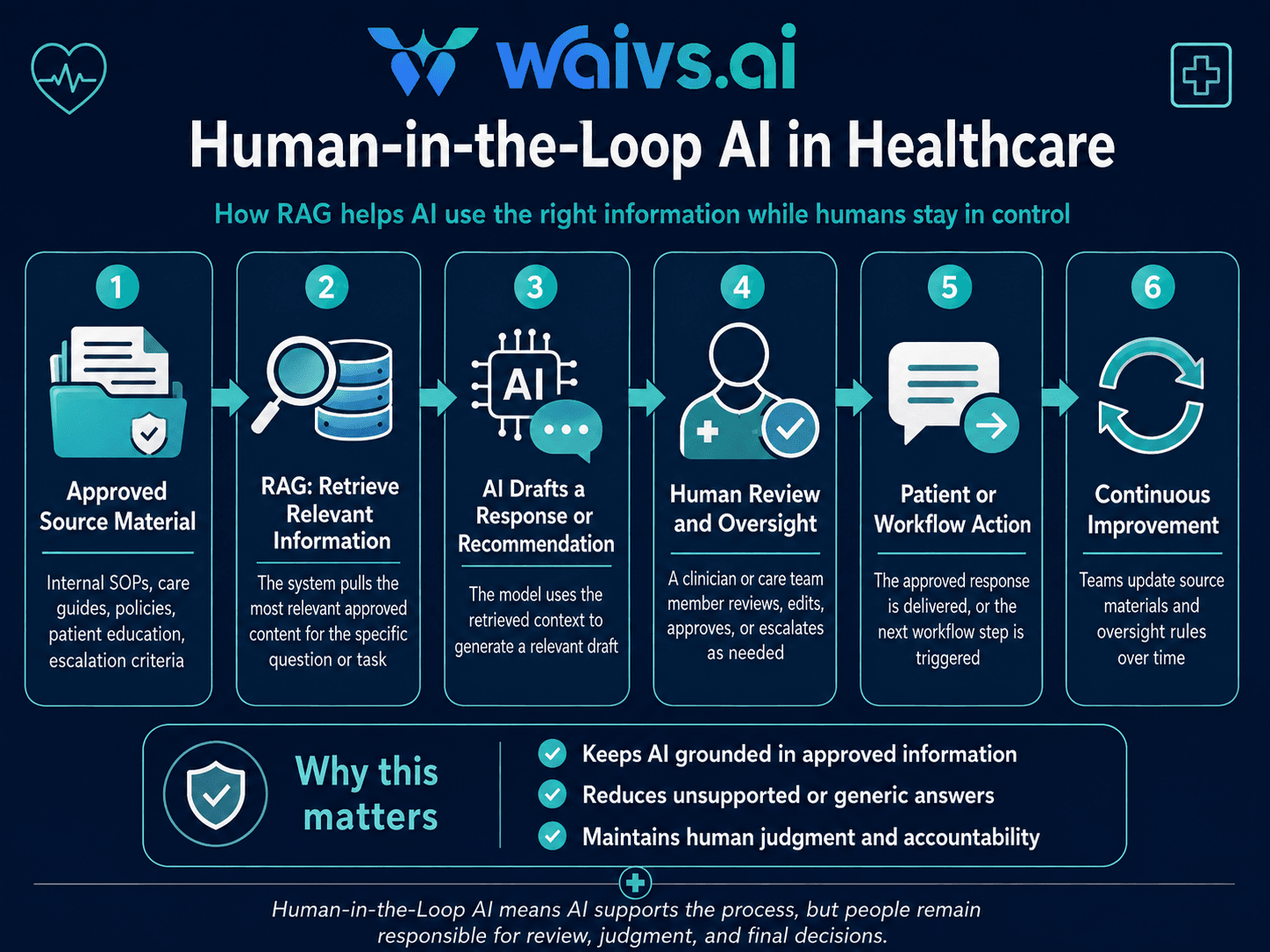
How Does Human-in-the-Loop AI Work in Surgical Patient Care?
Human-in-the-loop is not a single approval button. It is an operating model that defines what the AI may do, what it must not do and where people remain accountable. Human oversight begins before the first patient message A responsible AI workflow is designed by people before it is used by patients. The surgical program decides which use cases are appropriate, […]
 Bariatric Surgery
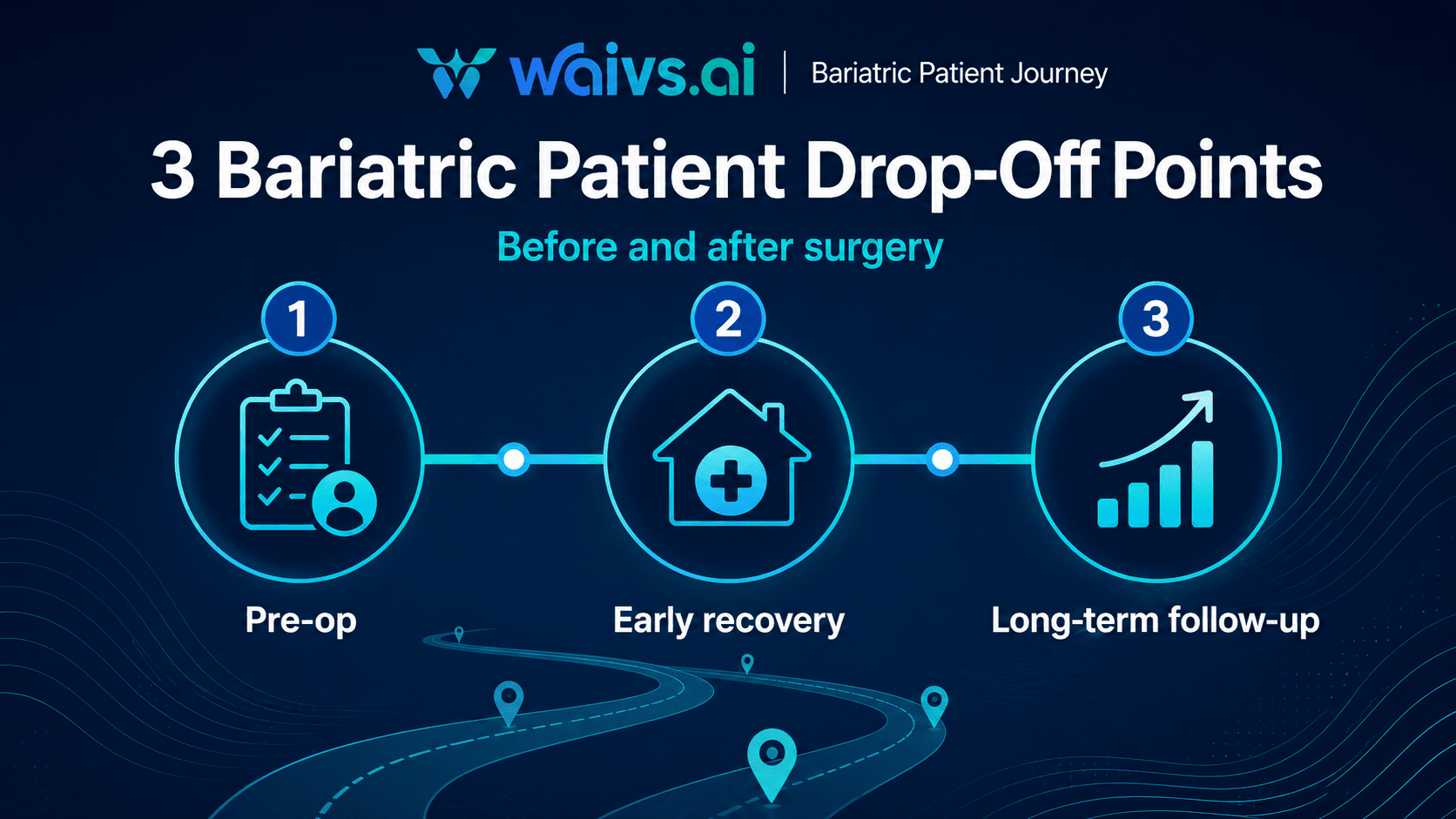
Three Places Bariatric Patients Disengage Before and After Surgery
Patient disengagement is common across surgical practices. It usually develops through small missed steps, unanswered questions and fading contact across a long bariatric care journey that can feel overwhelming to patients. Patient leakage is usually a pathway problem, not a single missed call Bariatric programs often use the term patient leakage to describe patients who stop progressing, disengage from follow-up or leave the care […]